

-1.png?width=400&height=386&name=Group%2026%20(1)-1.png)

ABM in HubSpot isn’t hard.
But running it without breaking your pipeline? That’s where most teams fail.Here’s the simple version:
First: ABM ≠ Campaigns
If you treat ABM like email + ads, it fails.
It’s a system shift:
- Leads → accounts
- Volume → signal
- Campaigns → coordination
Recent coverage from HubSpot Blog (2026) reinforces this shift toward account-level strategy over lead-based execution.
Step 1: Define Target Accounts
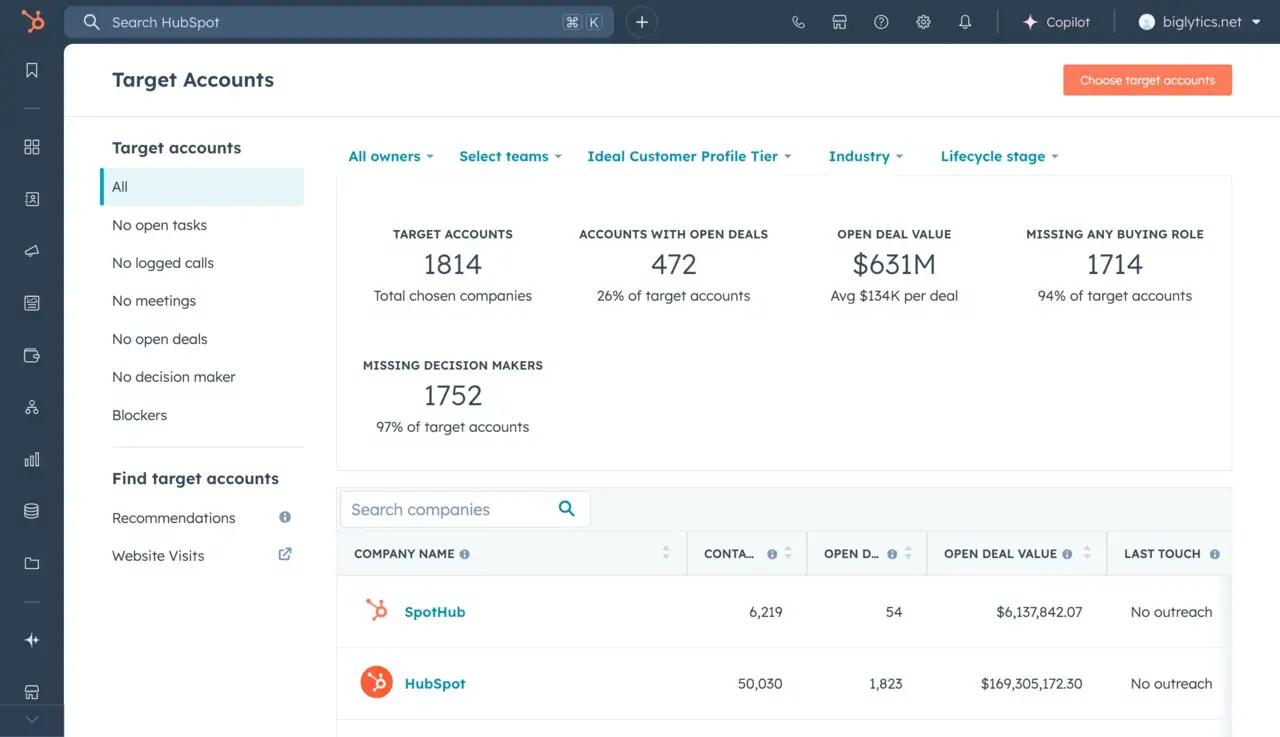
Keep it tight:
- High-fit companies
- Real engagement signals
- Past deal patterns
Then tier them (1:1, 1:few, scaled).
Industry reports from Gartner in 2026 continue to show that smaller, higher-intent account lists outperform broad targeting in B2B.
Step 2: Fix Your HubSpot Structure
- Companies = source of truth
- Contacts properly associated
- Add:
- Target account
- Tier
- Account stage
And most importantly:
👉 Lifecycle stages should reflect account progression, not just leads.
Step 3: Segment by Accounts
Stop asking:
“Who converted?”
Start asking:
- Which accounts are heating up?
- Where do we have buying group activity?
Recent insights from Forrester (2026) highlight that B2B buying decisions now involve multiple stakeholders, making account-level visibility critical.
Step 4: Align Sales + Marketing Signals
Set up:
- Alerts for multi-contact engagement
- Tasks triggered by intent
- Routing based on account ownership
ABM works when systems drive action, not just track activity.
Step 5: Run Coordinated Plays
Think in journeys:
- Sales outreach
All aligned.
No disconnected messaging.
Step 6: Measure Accounts (Not Leads)
Track:
- Engaged accounts
- Contacts per account
- Pipeline by account
According to recent benchmarks discussed by Demand Gen Report (2026), account-level metrics are now the primary indicator of ABM success—not MQL volume.
Where Most Teams Break
- Data isn’t connected
- Lifecycle stages don’t match reality
- Signals don’t trigger workflows
This is why ABM feels messy.
Want to Go Deeper?
If your pipeline feels off, start here:
👉 https://www.motionabx.com/hubspot-abm-consulting
And for more context, these recent reads (last ~3 months) connect the dots:
- From HubSpot Blog: evolving lifecycle models for modern B2B teams
- From Gartner: why intent-driven account selection is outperforming broad ICP targeting
- From Demand Gen Report: shift from MQLs to buying group engagement
TLDR;
ABM in HubSpot works when:
- Accounts are the center
- Systems are aligned
- Signals trigger action
Do that, and pipeline becomes predictable.
Miss it, and ABM just adds noise.